Will Community-Led Conservation Accelerate Africa’s Ambition to Attain the 30×30 GBF Target?
By Kenya Wildlife Conservancies Association (KWCA)
Global momentum is building to achieve Target 3 of the Global Biodiversity Framework, which sets a goal of conserving at least 30 percent of Earth by 2030. With just over four years left, urgency is key to safeguarding the planet’s ecosystems.
In Africa, only 16 percent of land is currently protected by governments, with limited scope for expansion due to a widespread human footprint. This dynamic presents a significant challenge if countries were to rely solely on state-led conservation to achieve Target 3. However, there is reason for optimism. The rapid growth of community-led conservation (CLC) across the continent offers a viable pathway not only to meet but potentially exceed the target.
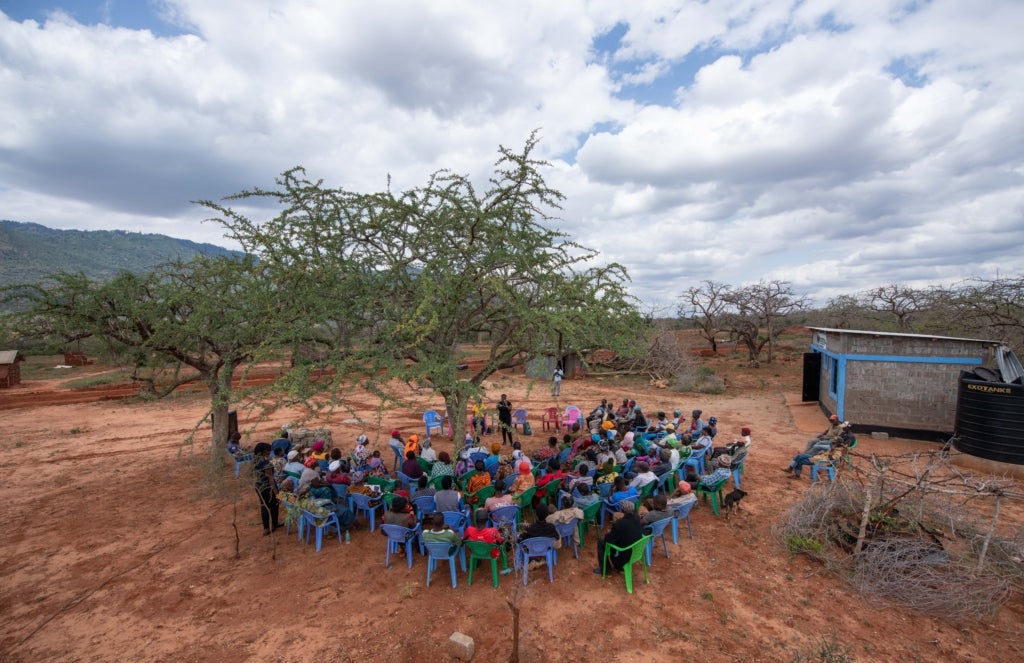
Local communities and landowners are increasingly at the forefront of conservation—managing landscapes, protecting biodiversity, and deriving sustainable livelihoods from natural resources. In Kenya, for instance, 230 conservancies cover 10.8 million hectares, equivalent to 15 percent of the country’s landmass. In Namibia, 86 conservancies span 16.9 million hectares, 20 percent of its land). And in Tanzania, 37 wildlife management areas cover 3 million additional hectares of ecologically vital land.
Community-led conservation is grounded in local knowledge, values, and inclusive governance. Communities jointly develop strategies and plans, thus fostering ownership and long-term sustainability. Increasingly, communities are embracing conservation as a complementary land use, integrated with livelihoods such as pastoralism. Evidence from across the continent shows that the CLC approach restores landscapes, strengthens ecosystem connectivity, and enhances biodiversity outcomes.
The strength of CLC lies in its design, which features local leadership and decision-making and equitable benefit-sharing. When communities directly benefit from conservation, they are more invested in protecting natural resources, resulting in both ecological and socio-economic gains.
Despite these strengths, landowners and local organizations face myriad challenges in advancing CLC, including limited representation in global conservation discourse, gaps in policy and regulatory frameworks, and inconsistent funding. These barriers risk undermining the progress made and must be addressed to sustain momentum.
Efforts to tackle these challenges are gaining traction. In September 2025, a community-led conservation workshop in Nairobi, Kenya, brought together representatives from several African countries, including Tanzania, Uganda, Namibia, and the host, Kenya. One key outcome was the establishment of a CLC community of practice, an important platform for collaboration, knowledge sharing, and collective advocacy.
The workshop also led to a shared definition of community-led conservation as “a model where communities take the primary lead in decision-making and management, benefiting sustainably from their natural resources.” In addition, it documented core principles that have long guided community conservation efforts but had not previously been formally articulated.
This emerging community of practice aligns well with the ILCN’s mission of connecting organizations and people around the world to accelerate voluntary, private, and civic-sector action that protects and stewards land and water resources. In Africa, a partnership between the ILCN and KWCA (its African Regional Representative) provides an opportunity for an Africa-wide coordinated platform for organizations managing or supporting community and private land conservation.