
ILCN Attends UN Convention to Combat Desertification COP17
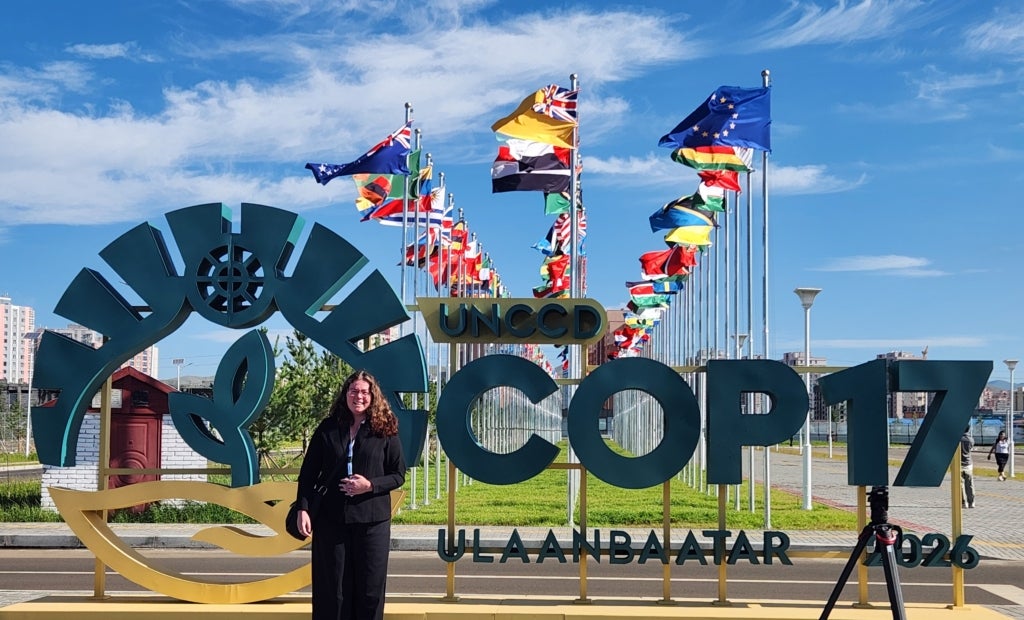
By Robin Beckham
Robin Beckham, Policy Analyst for Land Conservation at the Lincoln Institute of Land Policy, represented the International Land Conservation Network (ILCN) at the UN Convention to Combat Desertification COP17 in Ulaanbaatar, Mongolia, on August 19-27. Taking place during the UN Year of Rangelands and Pastoralists, COP17 celebrated herders and other rangeland users and sought to move from land degradation neutrality commitments to implementation and on-the-ground action.
Despite delays in formal negotiations due to political challenges, COP17 produced a US$1.3 billion portfolio of investments for land restoration and drought resilience, including the $1.2 billion Rangelands Flagship Initiative. While the negotiations focused on land degradation neutrality, restoration, and global targets at a high level, side events explored topics such as practical restoration approaches, public–private initiatives to reduce land degradation, and sustainable agriculture policies.
The Nature Conservancy Mongolia, together with the Mongolian Nature Legacy Foundation, hosted several side events marking the advancement of protected lands and restoration activities in Mongolia. A key focus was Eternal Mongolia, a Project Finance for Permanence initiative designed to expand protected areas, increase land under effective community stewardship, and create long-term financing mechanisms for stewardship and restoration.
Looking ahead to the Climate Change COP31 and CBD COP17, there was a lot of appetite for synergies across the Rio conventions’ indicators, although this was a point of contention in formal negotiations. Several countries formed a side committee focused on streamlining the reporting requirements across conventions, to make them less burdensome for countries with limited capacity and to increase the efficiency across these different areas of work. As one attendee remarked, “People on the ground are not experiencing this as three separate crises. Biodiversity, climate change, and land degradation and desertification have always been linked.” The global agreements should work in concert to advance the work more quickly and effectively. While it remains to be seen how effectively these new commitments translate into action, the UNCCD COP17 reiterated the critical importance of land as a central element to responding to the crises of climate change, biodiversity, and land degradation and desertification.