Wetlands as Climate Solutions: Eurosite’s Nature-based Solutions Study Tour to Slovakia
By Taylor Black and Mónica Vidal
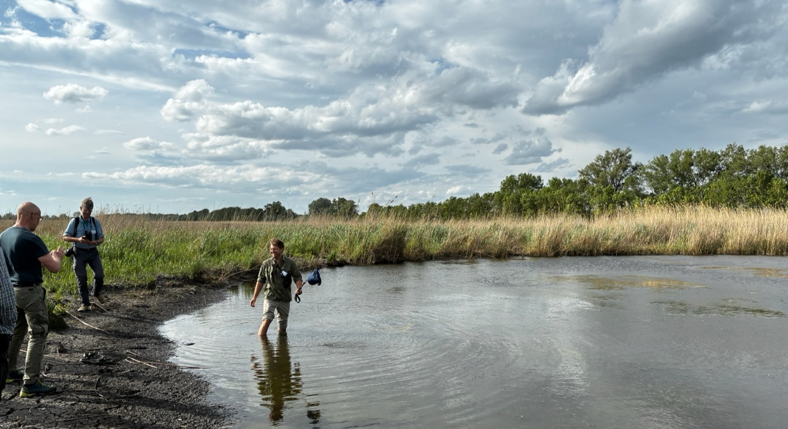
After a gust of wind blew Henk’s hat into the water, it didn’t take long for Paul to roll up his trousers and wade in to retrieve it. Armed with a walking stick, he returned hat-in-hand to a round of applause. This moment, on Day 3 of Eurosite’s Nature-based Solutions (NbS) Study Tour to Slovakia, captured the spirit of the week: people from across Europe forming connections through their shared dedication to protecting and restoring nature.
From 4-8 May 2026, conservation practitioners from ten European countries joined a Study Tour organized by Eurosite – the European Land Conservation Network and hosted by Slovak partners BROZ – Conservation Association and SOS/BirdLife Slovakia. Together, participants explored wetlands, salt marshes and restored floodplains that demonstrate how healthy ecosystems can address climate change, biodiversity loss and water scarcity simultaneously.
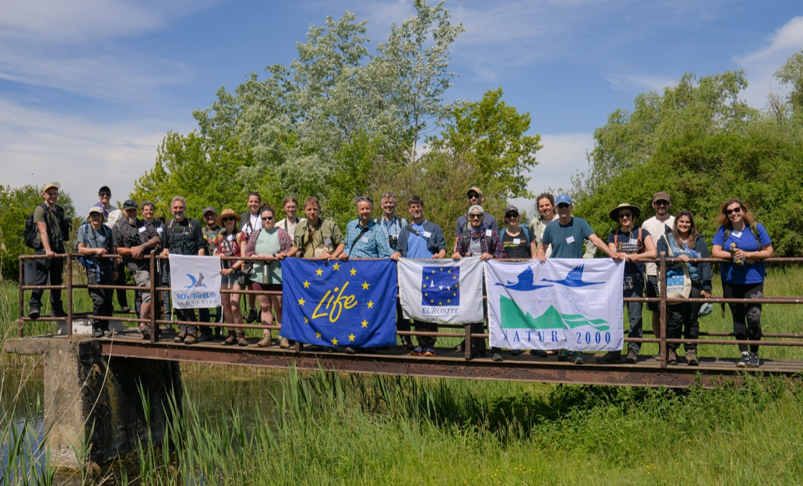
Eurosite’s[M1] Study Tours are unique opportunities for conservation practitioners to share experiences and approaches to common challenges across Europe. Now in its fifth edition, the NbS Study Tour was originally developed within Eurosite’s NbS Working Group to spread the concept of natural climate buffers to practitioners outside of the Netherlands. Since then, this event has visited Scotland, Ireland and the Camargue in France in search of NbS.
Nature-based solutions use natural processes to respond to societal challenges like flooding, drought, pollution and rising temperatures. Rather than relying on technical or engineered fixes, NbS work with ecosystems. A restored wetland that stores floodwater and filters groundwater is an example of NbS, and so is extensive cattle grazing that maintains species-rich grasslands and limits invasive vegetation. Well-designed NbS strengthen climate resilience while restoring ecosystems and serving surrounding communities.
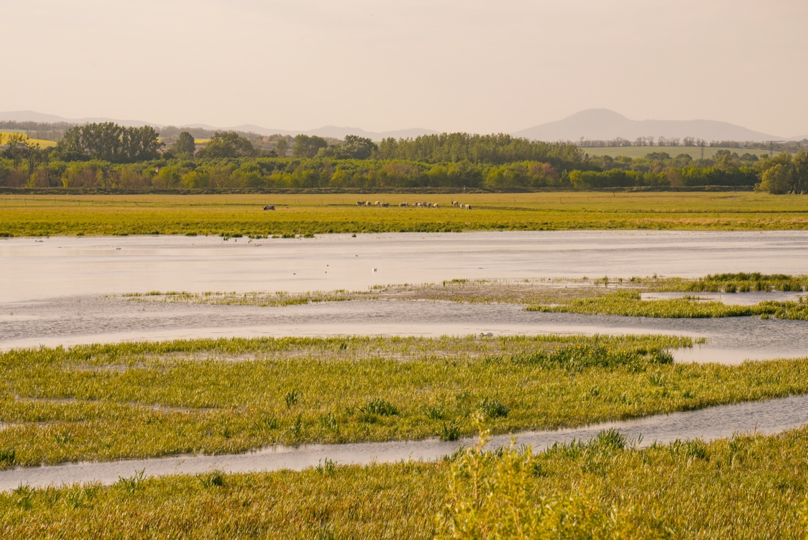
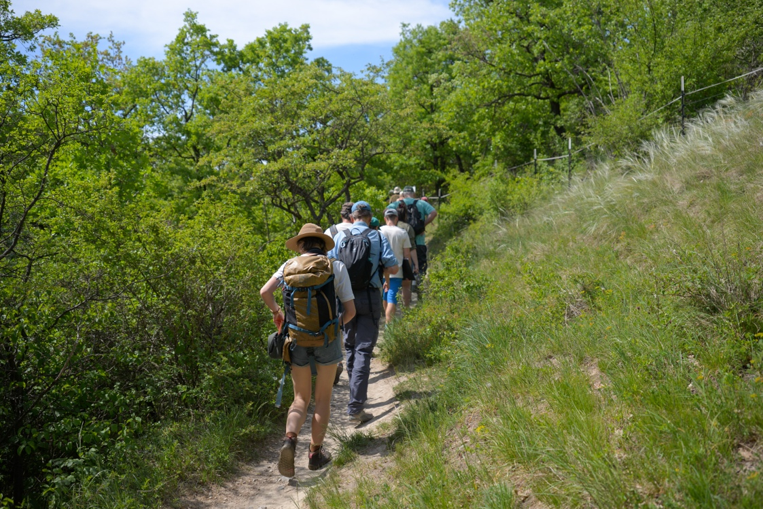
Throughout the week, participants visited sites across southern Slovakia that showcased NbS in practice. At Parížske močiare, Slovakia’s largest reed wetland, restoration efforts are improving water regimes and creating habitats for wetland birds. At Kameninské slanisko, free-roaming grey cattle help maintain one of Slovakia’s last remaining inland salt marshes. At Dunajské luhy, restored river branches and floodplains support biodiversity while retaining water in the landscape. At the Istragov and Čiliž wetlands, restoration projects have returned water to areas that had been drying out for decades. And finally, at BROZ’s thriving eco-farm on Veľký Lél Island, grazing is restoring a dynamic mosaic of meadows, forests and wetlands.
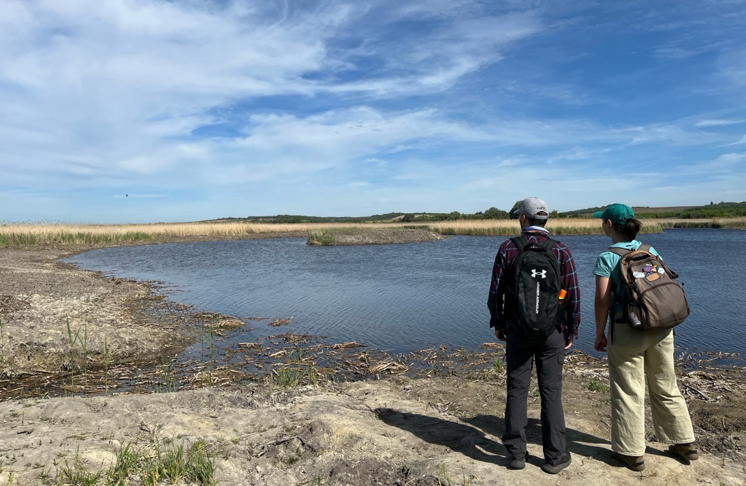
Beyond the field visits, the study tour created space for exchange between practitioners working in different political, ecological and institutional contexts. Participants compared experiences of land ownership, grazing practices, restoration financing and political support for conservation. In Slovakia, BROZ owns areas of land, enabling long-term management and restoration. In Hungary, by contrast, NGOs cannot directly own land. In some countries, political momentum for NbS is growing; in others, conservation organizations are still making the case that restoring nature is also a social and economic investment.
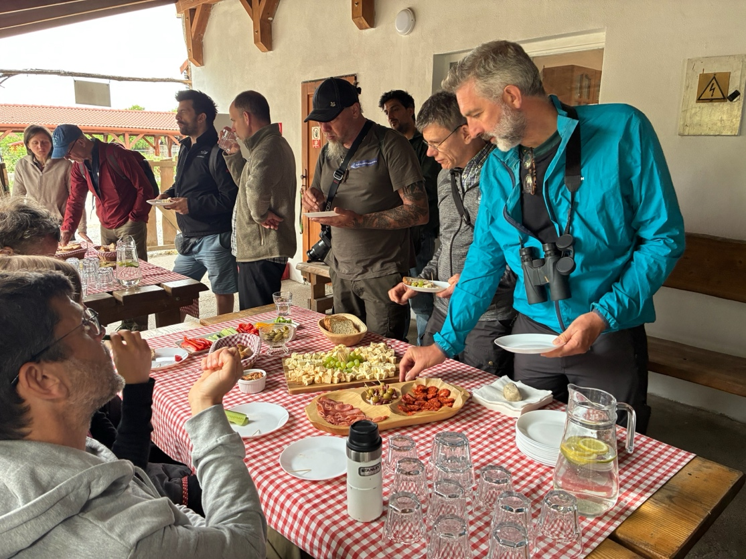
These discussions continued over shared meals, on long bus rides between sites and during a dedicated workshop on NbS. Despite the different national realities, a common theme threaded through the week: environmental challenges do not stop at borders, and neither should the solutions. Effective responses increasingly depend on international cooperation. The EU Nature Restoration Regulation, the first EU-wide law dedicated to restoring degraded ecosystems, came up repeatedly in this context as both an ongoing challenge and a shared imperative.
By the end of the week, Paul retrieving Henk’s hat had come to symbolise the group’s willingness to support one another and learn together. Many left (or remained in) Slovakia with fresh motivation and new connections, reminded that they are not doing this work alone.
This Study Tour was supported by NABU and the Deutsche Bundesstiftung Umwelt, Natuurmonumenten – NL 2120, Natuurpunt and Wetlands International Europe, and co-funded by the LIFE Programme.
