Guardians of the Future: What young people can teach the conservation sector about its next chapter
By Cecilia Riebl – ILCN Regional Representative for Australasia
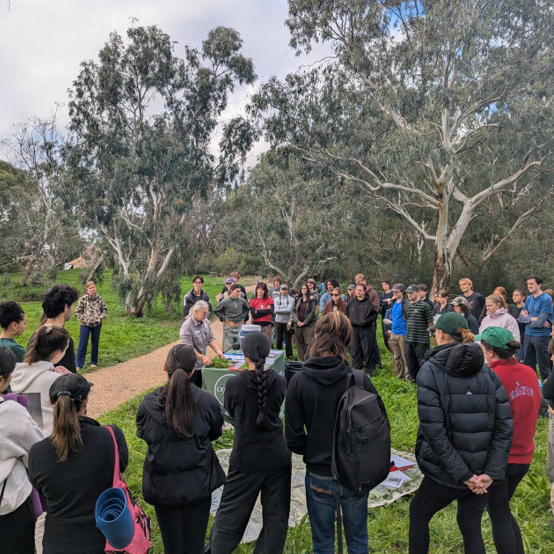
Where are young people in the conservation movement?
Across other parts of civil society – climate activism, social justice movements, community health, even political campaigning – young people are highly visible. They are organizing, volunteering, building movements, and, in many cases, leading. Yet in nature-based work, particularly land conservation, their presence can feel comparatively quieter.
Why is this, when younger generations are more concerned than any other about nature loss?
Is it a question of access: to land, to transport, to opportunities that feel open and relatable? Is it urbanization: a growing physical and psychological distance from nature, particularly for those raised in cities? Is it about representation: not seeing themselves reflected in the narratives, leadership, or pathways that define the sector? Or is it something more structural?
Conservation movements are, and always have been, driven by people who care deeply, often under-resourced and working inside challenging policy environments and against environmental crises of enormous scale. They are themselves victims of structural limitations. Rather than leveling criticism against the sector, this article asks whether there is a mismatch between the way the sector has evolved and the way a new generation is coming to it.
Because many young people aren’t disengaged – they’re just engaging differently, through grassroots movements, digital networks, creative campaigns, and interdisciplinary careers that don’t always sit neatly within traditional definitions of conservation.
A recent webinar hosted by the International Land Conservation Network (ILCN) brought together young leaders from Australia, Singapore, Fiji, and Aotearoa New Zealand to reflect on how they are practicing conservation and how the sector may adapt and respond to these new approaches. What emerged was not a critique of conservation, but an invitation to question long-held assumptions about participation and leadership, and to recognize that engaging young people isn’t just about building the next generation of conservationists, but about expanding what conservation can be.
There’s more to conservation than just ‘conservation’
If there was one common thread across all four speakers, it was that young people aren’t simply ‘the future’ of conservation – they’re already contributing value the sector urgently needs, now. This includes boots-on-the-ground energy, but also fluency in communication, comfort with experimentation, and interdisciplinary thinking. But perhaps most importantly, they bring an ability to connect conservation to wider questions of identity, well-being, justice, culture, and everyday life.
Conservation is community
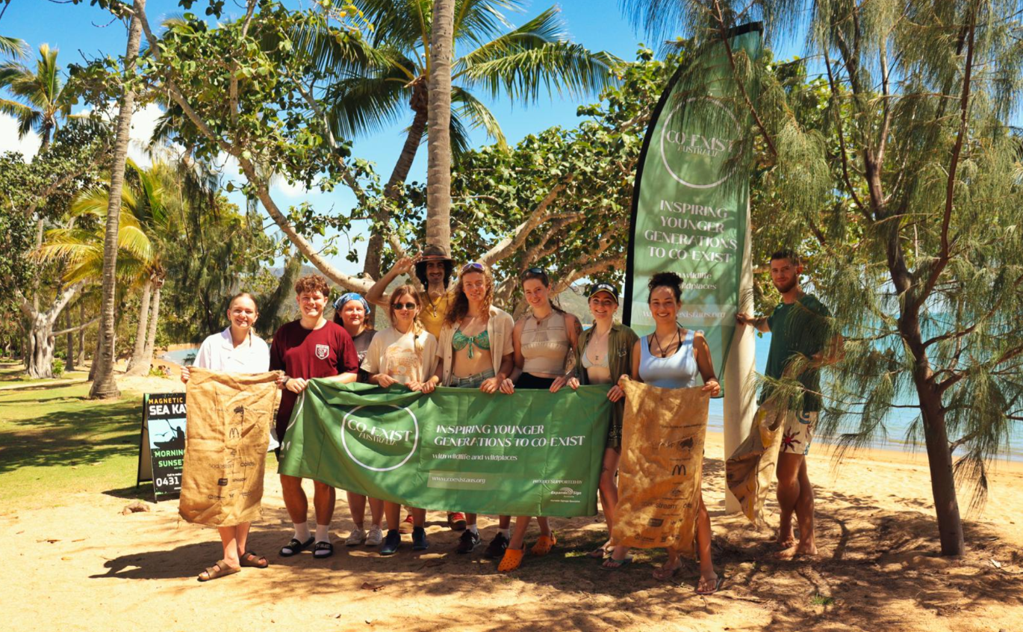
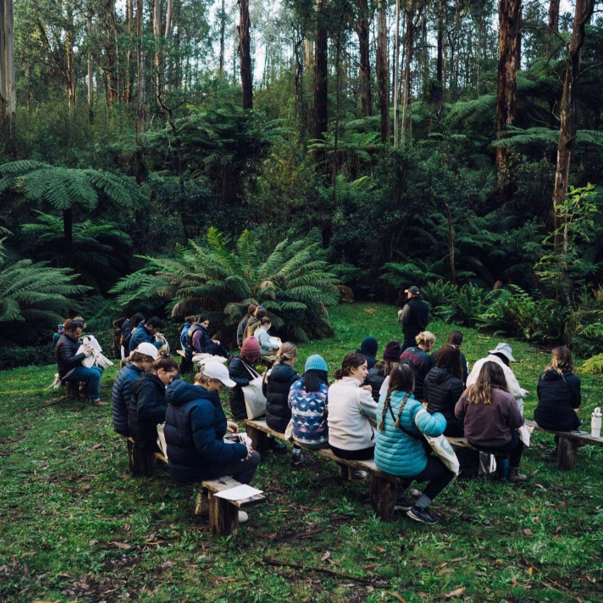
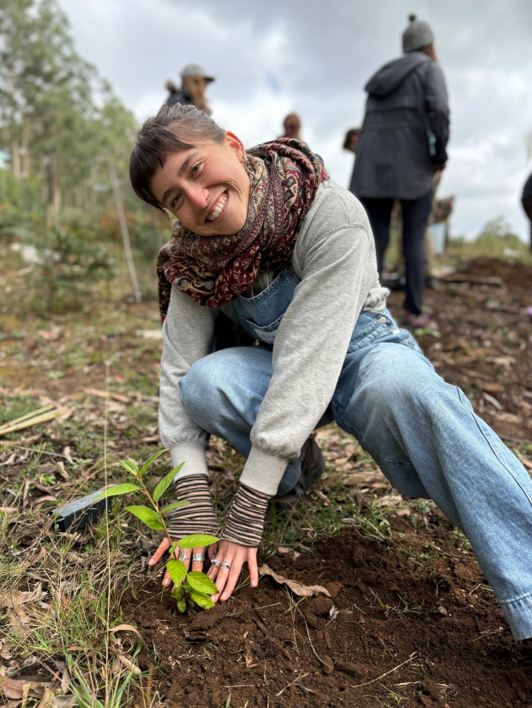
Kurt Jones, founder of Co-Exist Australia, has built one of Australia’s fastest-growing youth-led conservation movements around a deceptively simple proposition: young people want to protect nature, but they also want connection, belonging, and agency. So when Co-Exist hosts an event, such as tree planting, it is often combined with camping out, a hike, yoga – even an ice bath. Jones observed, “We’re not thinking about how to engage young people in ‘conservation.’ We’re thinking about how to facilitate friendship, social connection, and mental well-being. The conservation follows naturally.”
Similarly, Adriana Bird – senior policy advisor at the Ministry for the Environment in Aotearoa New Zealand, previously Special Advisor Youth of the New Zealand National Commission for UNESCO, and youth innovator across a range of environmental movements – put it perfectly when she said, “Young people aren’t just looking for ‘causes.’ They want connection.”
Conservation is culture
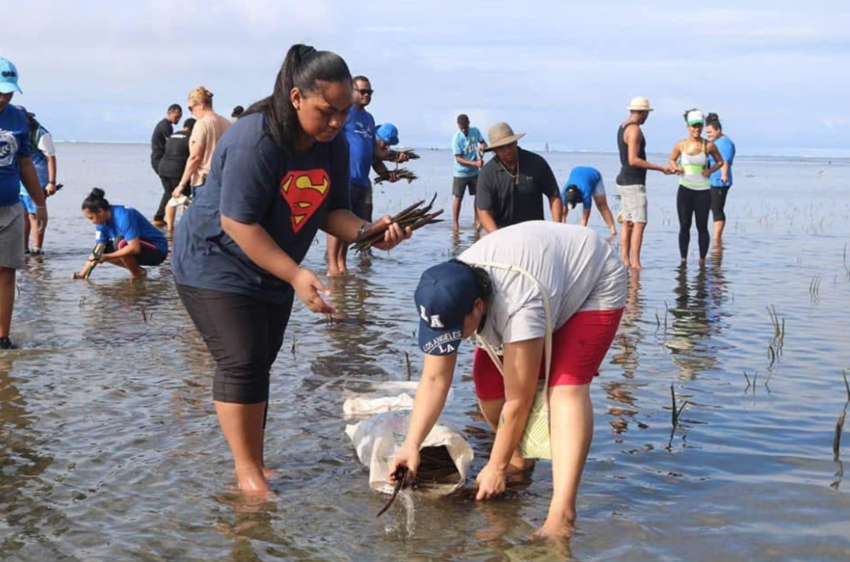
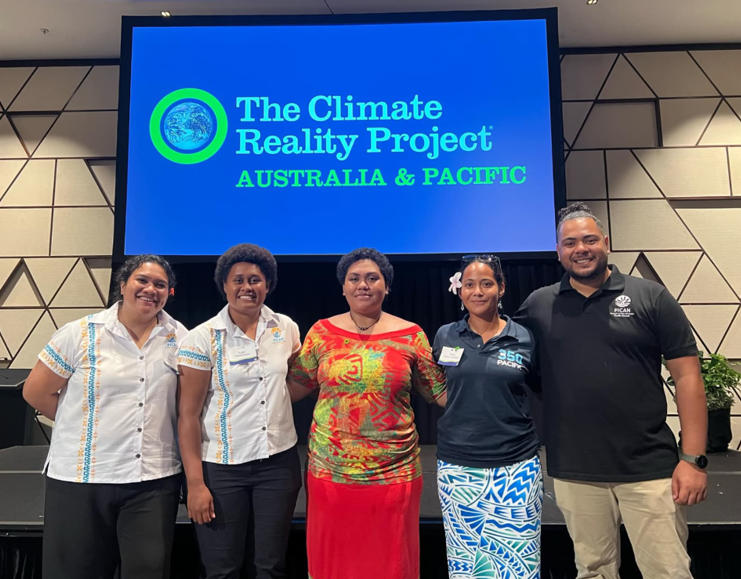
AnneMary Raduva, founder of Youth Eco-Champions in Fiji, has led extensive mangrove restorations across her country. The success of these events has been rooted in culture: ritual, prayer, fun, and competition. As Raduva observed, “We’ve tried to approach these events with fun and humor, and a very islander style of engagement.” In this context, youth leadership in conservation is at its strongest when it is rooted in culture and when young people can be seen and heard – not just treated as symbolic.
Adriana Bird reflected that we can learn a lot from Indigenous approaches when we think about working with young people in conservation. “Rather than seeing us as providing ‘youth perspectives’ or ‘cultural insights,’” Bird said, “the sector needs to recognize that we offer a fundamentally different model of conservation.”
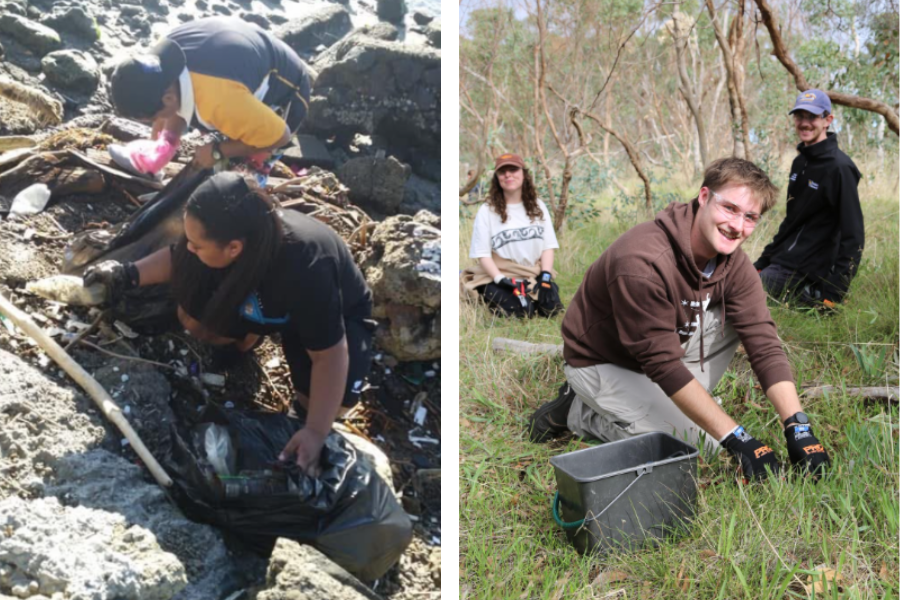
“Where private land conservation has historically been a model for keeping people out, it needs to evolve to be a proactive tool for human connection and resilience,” Bird added. “The Maori relationship to the environment is rooted in reciprocity and caretaking rather than ‘protection.’ In the same way, young people want conservation to be a lived relationship.”
“We need to change the culture around conservation. We need to change a whole generation,” Kurt Jones said. “Conservation shouldn’t be seen as a ‘sector.’ It should be seen as a way of life. And to do that, we need to change the message.”
Conservation is urban
Kymberly Goh represents Singapore Youth Voices for Biodiversity (SYVB), the Singapore chapter of the Global Youth Biodiversity Network under the Convention on Biological Diversity. In a dense urban context like Singapore, Kymberly’s work challenges the assumption that conservation only happens in remote landscapes or in obviously wild places. In her role as communications and outreach lead, she has brought nature to life via “Biod Bites,” an educational content series shared on Instagram and elsewhere to explain complex policy or international agreements in a relatable and accessible way.
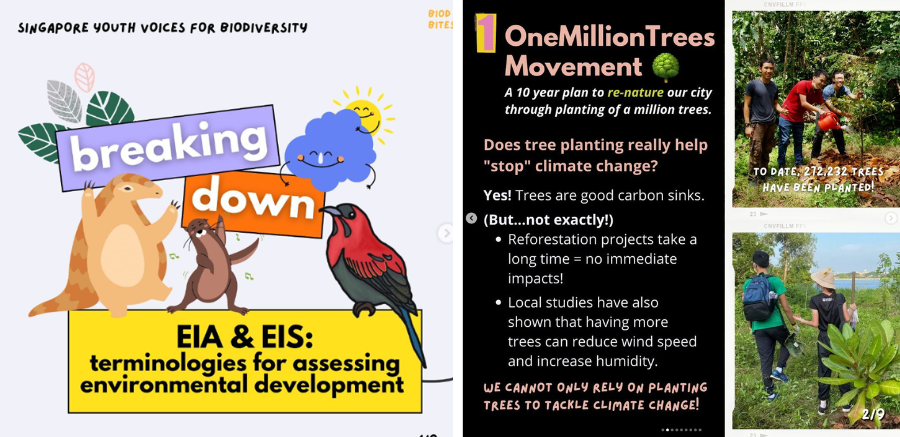
SYVB has also partnered with the Singapore National Parks Board to mentor a group of youths in storytelling and creating short-form video reels. In this way, storytelling, convening, digital advocacy, and public-facing campaigns are not secondary to conservation; they are part of how conservation becomes meaningful to young people, particularly in urban environments.
Conservation is reconnection
Unlike climate, which is global in its focus, nature is often hyper-local. Kymberly Goh observed that it is so important to “make it real, to make biodiversity feel real and connected to people’s everyday lives. For example, that forest that you used to visit is gone now – that is really activating for people. When people have a relationship with a place – whether it is a forest, park, the beach, our marine coastlines – they become more invested in understanding it and protecting it.”
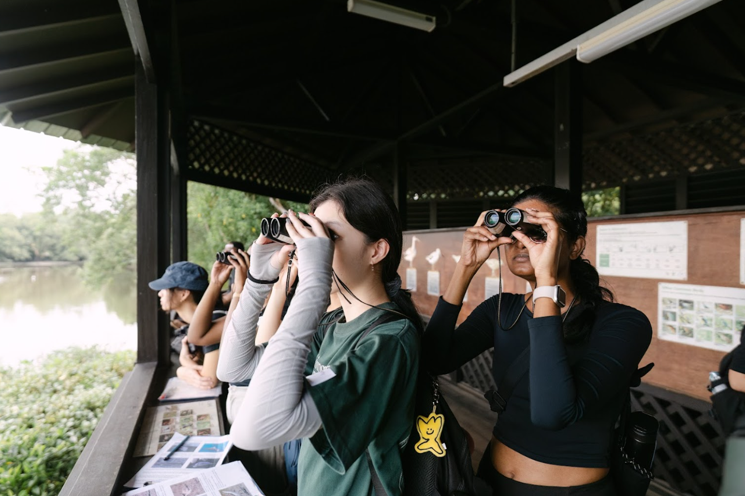
In this way, conservation is grounded in place. And it should create enabling spaces where young people don’t just protect nature but reconnect with it. Bird highlighted a campaign currently underway in Aotearoa New Zealand to push back against proposed legislative changes that would significantly reduce marine protections. The campaign to date has successfully mobilized a huge number of Kiwis who wouldn’t typically identify as marine conservationists, but are nonetheless achieving outcomes for conservation, because “when we link biodiversity challenges to everyday life, like camping, surfing and fishing, we make it worth fighting for, for everyone.”

Conservation is for everyone
One of the key objectives of SYVB is mainstreaming biodiversity issues and policy. “You shouldn’t have to be a scientist or activist to participate in conservation,” Goh observed. “Our goal is to help youth better understand our local biodiversity and related policy, where they can make an impact on conservation.” SYVB has made a point of convening nature-related engagement and advocacy training events that welcome and value young people from all backgrounds and disciplines, achieving broader appeal and better outcomes.
Jones reflected on his experience entering the conservation sector. “When I first started volunteering with local environmental organizations, I quicky realized I was the only young person present.” Co-Exist was the response to that problem.
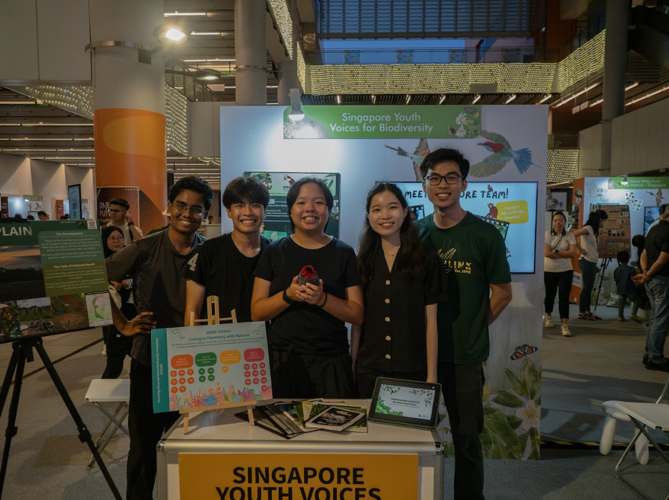
“We’re always talking about youth engagement in the environment and the conservation sector,” Jones continued. “This lens is too narrow and limits us to the young people that are interning or the young people that are ecology students or the young people that are passionate about the environment. But that’s not good enough. We need to be thinking about how we actually inspire a whole generation of everyday young people. There’s so much untapped opportunity there.”
In short, if the land conservation sector is serious about engaging younger generations, it needs to meet people where they are – online, in cities, in schools and universities, in workplaces, in unexpected communities, and across disciplines that don’t always self-identify as ‘environmental.’
Does conservation need a rebrand?
To engage younger generations, as Kurt Jones puts it bluntly, “conservation needs a rebrand.”
For many young people, especially those outside traditional environmental pathways, ‘conservation’ can still sound remote, technical, or specialized. That isn’t because conservation itself is inherently narrow. In practice, it is the opposite, intersecting with mental health, food systems, Indigenous rights, education, climate resilience, and community development, to name a few.
A better ‘brand’ for conservation wouldn’t diminish the seriousness of conservation work but rather actively communicate this breadth. It would help more people see that conservation isn’t only about preserving what remains, but about participating in the kind of future we want to build. It would show that there are many ways to belong.
How the conservation sector can support young people
As we reframe how we think and talk about conservation, there are a range of ways the sector can support young people now.
Access to land: Young people today are more disconnected from nature than ever, but also experiencing the most eco-anxiety. The conservation sector has a role to play in helping to build back this connection.
Support: Young people who do step up to lead community campaigns or advocate for nature often do this in silos, without adequate funding, mentorship, or structural support. This leads to burnout. “Everyone’s so tired all the time,” Bird said. “And a lot of the support that is offered is framed as ‘resilience training’ – helping young people deal with the world as it is, rather than actually fixing the unrealistic conditions. We need to reduce burnout by design.”
Sharing power: More than half of the world’s population is under 30, yet young people remain dramatically underrepresented in formal decision-making spaces. To change this, Bird said we must “empower young people to participate without perfection. What this means is that you make it okay not to be experts. Conservation is often framed through a technical lens, which can unintentionally exclude young people who don’t feel like they know enough or belong in the space.”
Conclusion
As Adriana Bird observed, “Engagement shouldn’t be viewed as something we ‘do’ to youth. It’s what happens when young people are able to participate meaningfully, connect, and belong to spaces.”
This, perhaps, is the biggest opportunity. Young people are not only a ‘constituency’ the conservation sector needs to engage; they are also a source of transformation for the sector. They can expand what conservation looks like, how it communicates, its cultural relevance, and its social imagination. They can help connect conservation to audiences that do not currently see themselves reflected in it. They can widen the sector’s field of practice, linking biodiversity protection to mental well-being, education, digital culture, Indigenous knowledge, urban life, and civic participation.
This evolution will require generosity on all sides. Established practitioners must be willing to share space, listen differently, and make room for co-creation. Young leaders must be willing to engage with complexity, inherit hard problems, and work across generations rather than against them. The good news is that this is already happening.
If the next generation has too often been left ‘outside the fence,’ the task ahead is not simply to open the gate. It is to build a different structure – one that reflects the breadth of what conservation can be, and who it can be for.